


INITIAL DEVELOPMENT
When we were first considering what to do for this project, our group had a multitude of ideas. The easiest route forward seemed to be doing a comedy, however, having saw some previous work done by a group a couple years above us we were interested in doing something a bit more serious.
https://www.youtube.com/watch?v=2PhNYb8sw8M
We liked the aesthetic that was going on with the film. A human character had been done, without complex features, an a touching story which was not too complex.
After a long debate over what we should do, putting many ideas against each other to little avail, we took to our own to make up different storyboard animatics for our class presentation, and let the audience decide.
My idea was based around simplicity. I know that we have technical people on my team, so I had the idea of keeping the setting, modelling and characters of my idea ultra simple so that we could make a very highly polished final result. A bag of marshmallows comes to life, and they break out to escape. As they are escaping, they realise something is wrong, and is turned around to realise that they are all being skewered and melted. It was more based around a horror piece.
One of the main inspirations behind this would from advertising, particularly the Krave adverts. Simple, not much narrative, and can definatley fit into a 30 second slot.
https://www.youtube.com/watch?v=dL_4hWTAn1Q
Another member of the group had an idea involving a snail, who has forgotten it is valentines day, and rushes home to give a present to its lover who is a roll of tape. The audience reacted a lot better to this idea, so we decided to go for that.
https://chervenyakova.files.wordpress.com/2018/03/1-jpg-2018-03-22-05-07-12.gif?w=740&zoom=2
As a group we went about then creating a more refined storyboard and addressing some issues that had been brought up to do with some of the scenes in it, and discussing what kind of effects and editing we are going to use.
From work on the previous project, I understand a lot more the importance of concept art and early development. We will not have to the time or the leisure to take guesses at what we want the finished project to look like. We need to take the time to finesse whatever we want the viewer to see. We decided to set out and do some totals in order for us to go and develop lighting and some ideas for assets.
FIRST CONCEPTS




In preparation for my concept drawings I decided to look into some of the work done by Pixar for "A bugs life", one of my favourite films as a kid. I really like the art style which they went with, incorporating different patterns and textures to create a unique and interesting style.
.gif)
.gif)
First Modelling - 3D concepts
Introduction
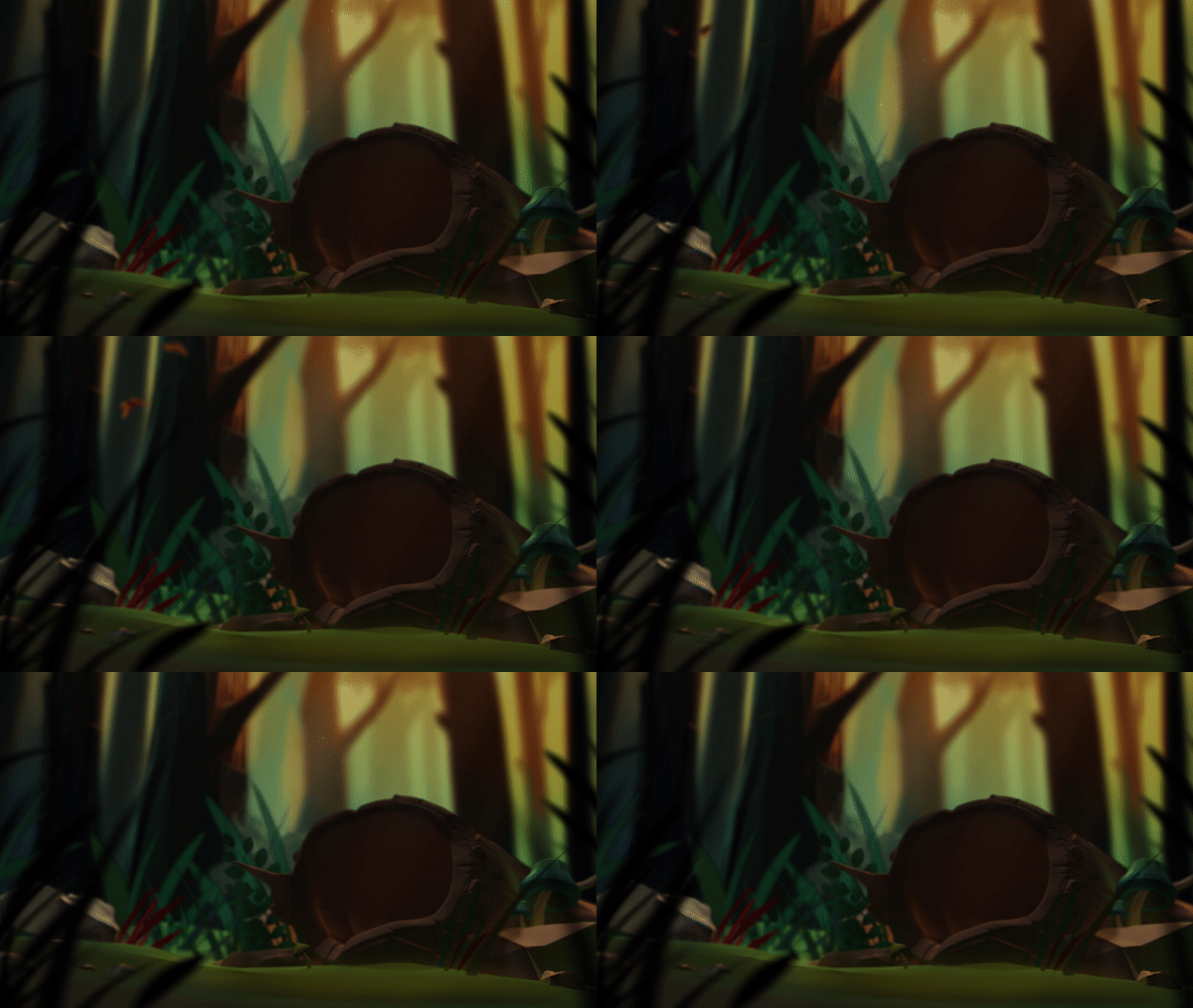
To show the class the progress we made for one of the development presentations, we decided to put together an image along the likes of the works of a freelance digital artist Mikael Gustafsson. We wanted to make a still image which still had some movement an animation within it to show the type of setting and tone that we want to go with.
Within the group, I decided to work with background and set development.


Rocks and Some mushrooms
For some initial concepts. I was thinking aroun
This is your Project Description. It’s a great place to describe your Project in more detail. Add images and provide visitors with essential information about your work, including the project length, partnerships or any successful outcomes. To hook new potential clients, show how your work has provided solutions for past clients.


Scene 1 design - 3D Concepts
Perfect Execution
Project DescriptionThis is your Project Description. It’s a great place to describe your Project in more detail. Add images and provide visitors with essential information about your work, including the project length, partnerships or any successful outcomes. To hook new potential clients, show how your work has provided solutions for past clients.
SCENE 2 DEVELOPMENT
After the first presentation, we decided to develop the second scene. I also decided to take a look into render layers, as I was worried over how we were going to render everything together.
 |  |  |
|---|---|---|
 |
SHAPE
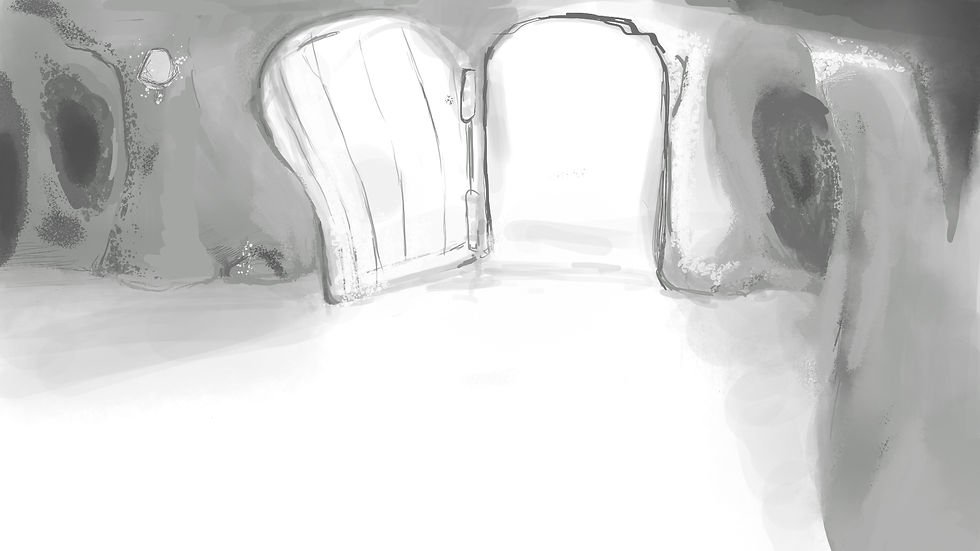
To start the modelling, I began to look at the animatic. The two immediate issues that I thought we would face is the entrance, as a snail has no arms, and the curvature of the room.
 |  |  |
|---|---|---|
 |  |  |
 |
ROCKS AND BACKGROUND PIECES
When designing the scene, I wanted to think about some character interactions Valentine could have with his surroundings in order to build his character. I thought of him walking in romantically with his flower, then using his eye to punch a rock in a wall which is actually a button which turns on a light in the room. I imagined light as a glowing mushroom, but as it was not discussed at the original concept stage then it was turned down by the rest of the group.
 | |
|---|
RENDER LAYER TEST
After sending my scene off to be adjusted, and with mostly everything being covered, I decided to experiment a bit into rendering. I began to play around with the render layers function, and once I wrapped my head around it, I found that it was pretty interesting. The first thing I tried to do is put a wireframe and an Ai standardsurface on everything. I also realised that by using this technique you can easily reduce the number of things you want to have rendered in a certain pass. I.e, having the character rendered on a different layer with a background, foreground and mid ground, to then edit all the pieces into one thing within aftereffects or another editing program such as Nuke - if they are saved as TIFs. I found that this greatly reduced render times.
 |  |  |
|---|---|---|
 |  |  |
 |  |  |
 |  |  |
 |  |
First Presentation
For the first presentation, we decided set a scene together to sell the general aesthetic we are going to be going with. We decided that the landscape I came up was too rocky. So it was replaced with grass. Histro added in the lighting and atmospheric effects using After Effects, while Maggie added the background animation of the Butterflies. Andrew had modelled a snail, however with problems with texturing and applying UV maps to the shell, it was not ready yet.
I'm happy with the way it turned out.
FURTHER RENDER TESTS


To reinforce what I was doing, I decided to take a test scene and break it down into a more obvious background, foreground, and midground layout. The task was to have nearly a full, most of which would be still images, and to have Valentine slither along the log.
It worked surprisingly well, and reduced render times quite a lot. However the fact that this method requires rendering in a TIF file, which is heavier than the PNG used for standard still images.
By rendering an Occulsion pass, It actually improved the definition of a lot of what was going on in the scene.

All Videos


